

Jazz In The Round is at the forefront of new music, offering a platform for emerging artists alongside established names.
Its flagship in-the-round night takes place monthly at The Cockpit in London’s Marylebone and has become one of the most respected nights in the Capital’s jazz calendar. Each event features three sets: an Emergence slot for new talent, a solo performance exploring new directions, and a headline set from leading artists in the scene.
Beyond its monthly programme, Jazz In The Round also curates pop-up events, festival stages, and shows for the EFG London Jazz Festival, maintaining a strong commitment to grassroots development and artist support. It is a Cockpit Production and a proud partner of One Jazz.
Follow @jazzintheround for updates.
Tickets available at thecockpit.org.uk
This month’s lineup …
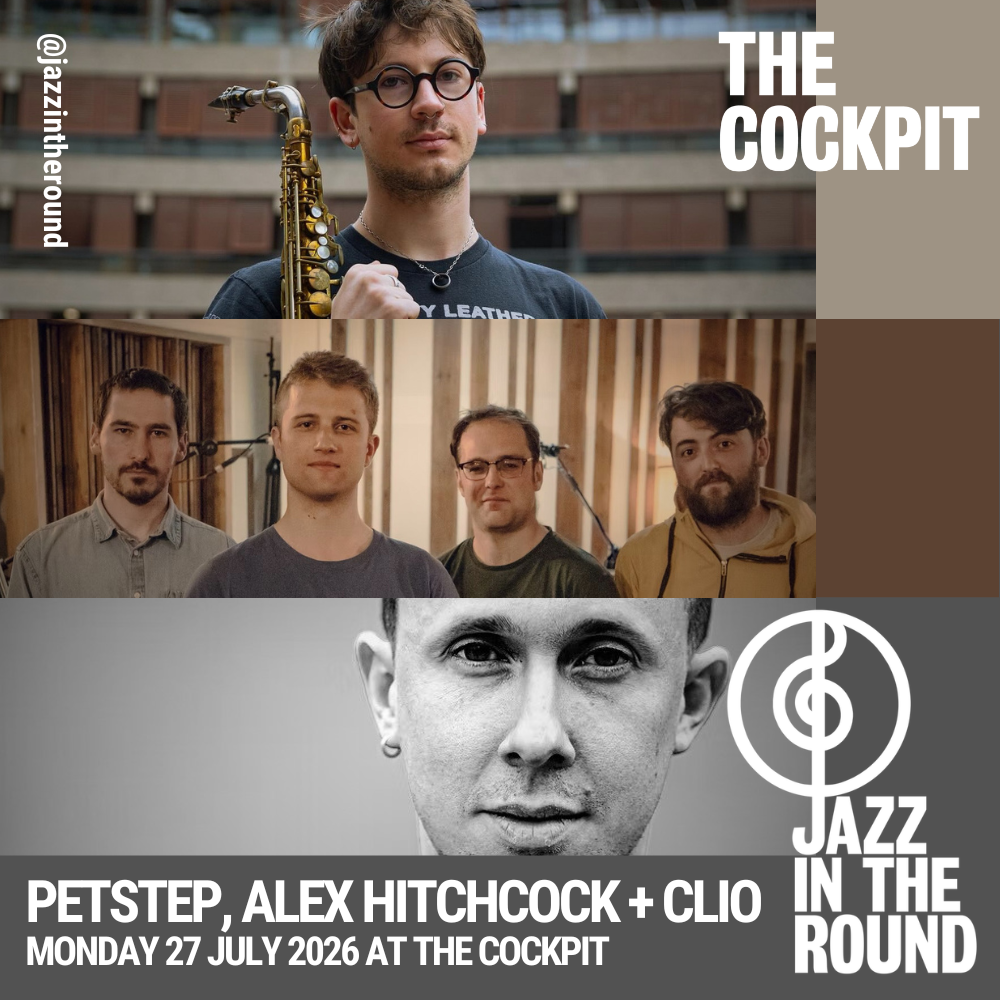
Luke Bainbridge’s PETSTEP – @lukebainbridgemusic
Alex Hitchcock @abhitchcock (solo)
Alex Hitchcock is a London-born saxophonist, composer, arranger, and producer based in New York. He draws inspiration politically as much as musically from artists in the radical tradition of Black American music, including Archie Shepp, Cecil Taylor, Hazel Scott, Ma Rainey, and Max Roach. His work reckons with the politics embedded in both the history and form of this music—and the struggle, resistance, and reinvention that have shaped it. Since emerging as a leader, Hitchcock has released four solo albums to widespread critical acclaim. The Guardian described him as a “virtuoso” saxophonist, while BBC Jazz World hailed him as “leading the charge in terms of new jazz music being created in the UK.” His work has been featured on the BBC, France Musique, WDR, JazzFM, Worldwide FM, and in leading publications such as Downbeat, MOJO, Jazzwise, Musica Jazz, Stereogum, and Uncut.Hitchcock is a two-time Ivor Novello Composer Award nominee (2020, 2022), Parliamentary Jazz Awards nominee for Best Album (2023), winner of the Peter Whittingham Award (2018), and recipient of a major prize at the 2019 Umbria Jazz Festival. His writing foregrounds musical form as a site of both freedom and resistance, rejecting the co-opting of jazz as a neat synthesis of difference. He says: “I don’t want compositions to be containers that the band just fills up—we can explode the container.” Dissonance and difference exist less to be resolved than to be explored, honouring the music’s historical role as a vehicle for dissent—always inviting the listener into that negotiation.
Jamie Harms’ CLIO – @clio_clio_clio_music / @111jamieharms